Can a Large Disc Herniation Heal?

Many patients are told:
“Your disc herniation is too large to heal.”
“It’s 8mm… 10mm… 12mm… that won’t go away.”
This is one of the most common fears after an MRI.
The reality is more nuanced.
Yes, large disc herniations can heal.
And in many cases, they shrink more reliably than smaller bulges.
This page explains:
• how disc healing actually works
• what research shows
• when healing is likely
• when surgery may be necessary
First: What Is a Large Disc Herniation?
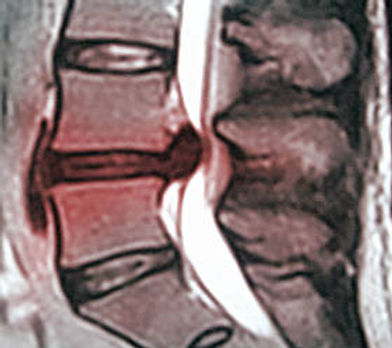
A disc herniation occurs when the inner gel of the disc pushes through the outer fibres.
There are different types:
• Disc bulge
• Protrusion
• Extrusion
• Sequestration
Large herniations are usually extrusions or sequestrations, where disc material has broken through the outer wall.
These look dramatic on MRI.
However, appearance does not automatically determine outcome.

How a Large Disc Herniation Heals
The body does not “push the disc back in.”
Healing happens biologically.
When disc material escapes the outer layer, the immune system recognises it as foreign.
This triggers:
• inflammatory clean-up cells
• breakdown of exposed disc fragments
• gradual reabsorption
• reduction in pressure on the nerve
Interestingly, larger extrusions often shrink more because more disc material is exposed to the immune system.
Multiple studies show spontaneous regression of large herniations over months.
Healing is usually gradual, not instant.
When Surgery May Be Necessary
Surgery may be required if there is:
• progressive muscle weakness
• foot drop
• worsening neurological deficit
• loss of bowel or bladder control
• cauda equina syndrome
These situations are uncommon but serious.
How Long Does Healing Take?
Disc healing is not linear.
Common pattern:
Weeks 1–6
• pain dominant
• inflammation high
• flare-ups common
Weeks 6–12
• pain fluctuates
• nerve sensitivity gradually reduces
Months 3–6
• strength stabilises
• walking improves
• flare-ups become less frequent
Full biological shrinkage may continue for up to 12 months.
I
maging often lags behind symptom improvement.
What Research Shows
Research demonstrates:
• Extruded and sequestrated discs have the highest rates of natural shrinkage
• Large herniations frequently reduce in size within 6–12 months
• Pain improvement often occurs before full radiological resolution
Importantly:
Pain improvement does not always require the disc to completely disappear.
The nerve needs reduced irritation, not a perfect MRI.
Why Patients Are Told It Cannot Heal
There are several reasons patients hear this:
-
The MRI looks severe
-
Symptoms are intense
-
The size measurement sounds alarming
-
There is concern about nerve damage
However, disc size alone does not determine surgical necessity.
The key factor is neurological function.
When a Large Herniation CAN Heal Without Surgery
Non-surgical management is commonly appropriate when:
• pain is present but strength is preserved
• reflexes are stable
• symptoms are not progressively worsening
• there is no bowel or bladder involvement
• walking capacity is gradually improving
Many patients improve over time with structured conservative care.
The body is capable of significant biological repair.
Important: Large Does Not Mean Permanent
The size of a disc herniation does not automatically predict:
• permanent damage
• lifelong pain
• need for surgery
What matters most is:
Is the nerve functioning?
Stable neurological findings are reassuring even with a large extrusion.
Not Sure If Yours Can Heal?
If you have already had a CT or MRI, a structured Disc & Nerve Assessment evaluates:
• the size and type of herniation
• neurological stability
• symptom behaviour
• risk factors
You will be advised clearly whether conservative care is appropriate or whether surgical review is recommended.